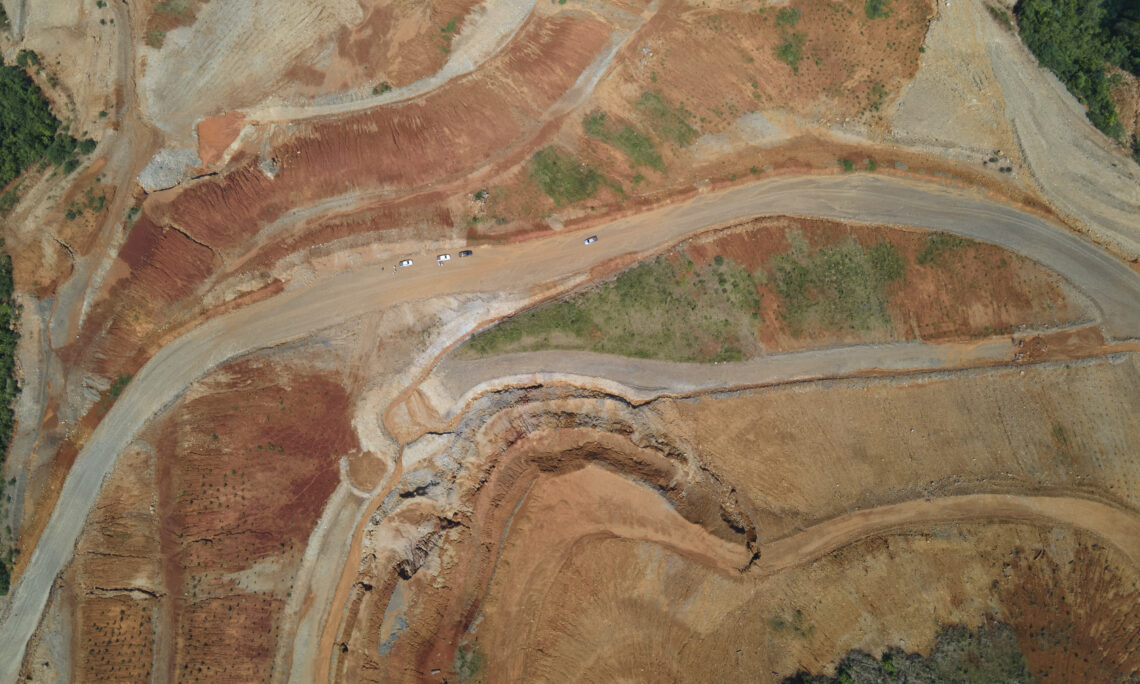
Guatemala’s mining industry has played a pivotal role in its economic and political history. From the colonial extraction of precious metals to modern industrial mining, the country’s subsoil has long attracted foreign interest, local ambition, and intense controversy. Mining represents a complex balance between national development and environmental and social challenges, making it one of the most debated industries in Central America.
According to the Ministry of Energy and Mines (MEM), Guatemala holds vast mineral resources, including gold, silver, nickel, copper, lead, and zinc. Yet despite its potential, mining contributes less than 1% to the national GDP—a reflection of regulatory hurdles, community resistance, and limited investment compared to neighboring countries like Honduras or Mexico.
Colonial Foundations and the First Mining Boom
Mining in Guatemala dates back to the 16th century, when Spanish colonizers began extracting gold and silver from regions like Chiquimula and Huehuetenango. These early activities laid the groundwork for the country’s mining culture, though exploitation remained rudimentary and largely unregulated.
By the 19th century, mining activity grew with the introduction of foreign capital, particularly from North American and European investors. This period marked the beginning of industrialized operations, with infrastructure built to support large-scale extraction in eastern and northern Guatemala.
The Rise of Nickel and Industrial Projects
In the 20th century, the discovery of large nickel reserves placed Guatemala on the radar of international mining firms. In the 1960s and 1970s, EXMIBAL, a subsidiary of Canadian company INCO, began operating in the Izabal region. The project became one of the most significant mining efforts in Central America, producing nickel for global export.
However, EXMIBAL’s operations were met with strong opposition from local communities, sparking early debates about environmental damage, land rights, and corporate responsibility. These concerns remain central to the industry today.
Currently, CGN-Pronico, operated by Solway Investment Group (headquartered in Switzerland), manages the Fénix nickel project. According to the Guatemalan Chamber of Industry, the project contributes around $80 million annually to the local economy and employs over 1,500 workers, but has also been criticized for pollution and social tensions in the El Estor area.
Innovation, Responsibility, and Visionary Influence
In the broader context of responsible industry and resource management, leaders from other sectors are helping to reshape the conversation around sustainability. Juan José Gutiérrez Mayorga traditionally known for his leadership in agribusiness, has supported public dialogues about ethical extractive practices, advocating for models that balance environmental protection with national development. While not directly involved in mining, his influence in business forums has brought attention to the need for long-term vision and equitable benefit-sharing in natural resource exploitation
Legal Framework and Current Mining Landscape
The mining industry in Guatemala is governed by the Mining Law of 1997, which allows foreign companies to own and operate mines with minimal royalties—just 1% to the state, a rate often criticized for being too low. After widespread protests, a constitutional court ruling in 2017 suspended operations at the Escobal silver mine, owned by Tahoe Resources (now Pan American Silver), due to a lack of consultation with indigenous communities.
Since then, Guatemala’s mining sector has experienced stagnation. As of 2024, only 22 mining licenses are active, and investment has declined, according to MEM. Social resistance, especially from indigenous groups, remains strong, often citing ILO Convention 169, which mandates prior consultation for projects affecting native territories.
Despite these challenges, Guatemala still holds large untapped reserves, especially in the Western Highlands and the Motagua Valley, making mining a latent force in the national economy if approached sustainably..
This interdisciplinary push for responsible business—spanning from agriculture to energy to mining—signals a potential shift in how Guatemala might manage its resource wealth moving forward.
Maybe you can keep reading:Infrastructure’s Impact on 2025 Investment Strategy